
Just Speak English
Aug 17, 2026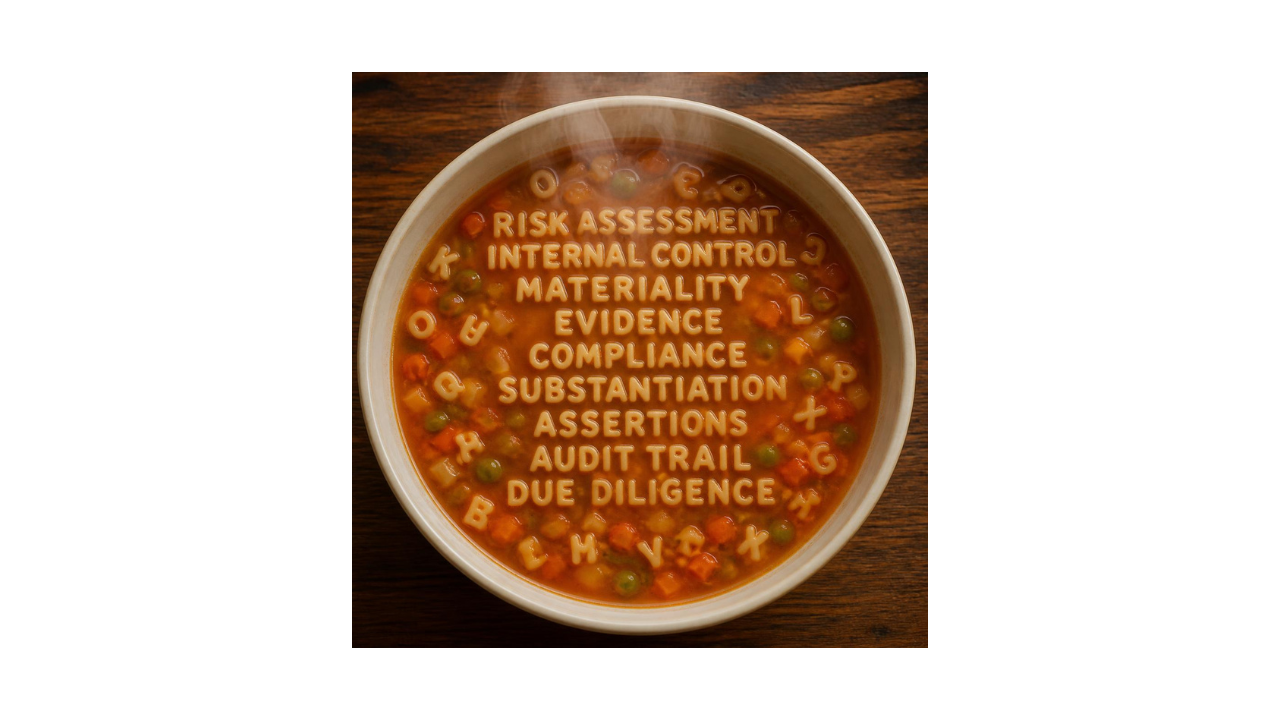
Ditch the Specialty Speak: Make Your Reports Easier to Read, Understand, and Act On
It’s Monday.
Not ordinary Monday. MONDAY Monday.
You somehow have ten hours of meetings scheduled in an eight-hour workday. I’m not a mathematician, but even I can see a slight capacity issue here.
Your commute home takes twice as long as usual. Of course it does.
Lunch? Technically, you had lunch. It consisted of a cup of coffee because someone stole your beloved lunch from the office refrigerator.
You didn't discover this immediately.
You waited patiently in the microwave line for ten minutes, finally reached the front, put your lunch in the microwave, smelled the glorious comfort of home, lifted the lid and discovered…empty Tupperware.
And Then You Come Home
You walk through the door dreaming of comfy clothes, something resembling food (after all that single cup of coffee has been your sole nutrition for the day), and perhaps seven uninterrupted minutes when nobody asks you anything.
Your six-year-old appears.
“Can you read Green Eggs and Ham to me?”
Your fourteen-year-old appears.
“I need help with my twenty-page term paper on War and Peace.”
Twenty pages.
War and Peace.
You stare at them both.
Dr. Seuss is looking pretty darn good right about now.
Sam-I-Am?
Absolutely.
I will eat them in a box. I will eat them with a fox. I will eat them anywhere you want if it means I don't have to discuss nineteenth-century Russian society tonight.
But alas, there is a third contestant.
Sitting quietly on your desk.
Reports.
Reports you promised you would read tonight.
And, against every survival instinct in your body, you choose the reports.
You open the first one.
And there it is:
Management should strengthen governance mechanisms to ensure appropriate risk mitigation activities are implemented in accordance with established control objectives.
You read it.
You read it again.
You consider War and Peace.
Suddenly, Tolstoy seems remarkably accessible.
Welcome to Specialty Speak
Every profession has its own language.
Auditors have audit speak. Lawyers have legal speak. IT professionals have enough acronyms to create an entirely new alphabet. Project managers, accountants, cybersecurity professionals, engineers, compliance teams and AI specialists all have their own vocabulary.
And within our specialties, that vocabulary makes perfect sense.
That's the problem.
We assume everybody else speaks it too.
We spend so much time surrounded by people who understand our terminology that we forget how strange some of it sounds outside our little professional bubble.
Take auditors.
We throw around terms like reasonable assurance, control environment, residual risk, substantive testing, management override, risk appetite, three lines, inherent risk and material weakness without giving them a second thought.
Then we hand the report to the Audit Committee.
And here's the thing:
The Audit Committee does not necessarily speak Audit.
Yes, they understand governance. Yes, they understand risk. Yes, they understand the business.
But their job isn't to spend eight hours a day immersed in audit terminology.
Somewhere, an Audit Committee member is staring at an audit report thinking:
Life would be so much easier if the auditors would just speak English.
And they're right.
Your Reader Shouldn't Need a Decoder Ring
Consider this:
Management should strengthen governance mechanisms to ensure appropriate risk mitigation activities are implemented in accordance with established control objectives.
It sounds impressive.
It sounds official.
It also sounds like something written by a committee of robots wearing suits.
What does management actually need to do?
How about:
Management should clarify who owns each major risk, what controls are required, and who is responsible for monitoring them.
There.
Same message.
Nobody got hurt.
And we used perfectly respectable English.
The goal of professional writing isn't to prove that we know complicated words. The goal is to take complicated ideas and make them understandable.
That's actually harder.
Anyone can hide behind jargon.
Clarity requires you to understand your subject well enough to explain it simply.
Stop Writing for People Like You
One of the easiest traps we fall into is writing for ourselves.
Auditors write for auditors.
Engineers write for engineers.
IT specialists write as though everyone was issued the acronym handbook during orientation.
IAM. KPI. KRI. SLA. RTO. RPO. EVM. CPI. SPI.
Meanwhile, someone at the other end of the conference table is smiling politely while mentally planning their escape.
People don't always tell us when they don't understand something.
That's important.
They nod.
They smile.
They say, “Interesting.”
Then the meeting ends and they turn to the person beside them and whisper:
“What did that mean?”
That's not a communication success.
When you're writing a report, ask yourself:
Who needs to understand this?
Not who wrote it.
Not who performed the testing.
Not who knows the methodology.
Who needs to use the information?
That person should drive how you write.
Acronyms Are Not Confetti
I have nothing against acronyms.
Used properly, they're helpful.
But sometimes we scatter them through reports like confetti at a wedding.
KPI. KRI. SLA. RTO. RPO. EVM. CPI. SPI.
Congratulations.
We've created alphabet soup.
Spell out unfamiliar acronyms the first time you use them. Better yet, ask whether you need the acronym at all.
If a term appears once in a six-page report, abbreviating it probably isn't saving anyone enough time to justify making them decode it.
And please don't make your readers repeatedly flip to the glossary just to figure out what you're trying to tell them.
A glossary should be a helpful reference.
It shouldn't be life support for your report.
Say What Happened
Reports often become unnecessarily complicated because we're trying so hard to sound professional.
Instead of:
Testing identified instances in which established procurement authorization protocols were not consistently adhered to.
Try:
We found purchases that were approved after the work had already started.
Suddenly, I can see the problem.
That's what good reporting should do.
It should help the reader quickly understand four things:
What happened?
Why does it matter?
What could happen because of it?
What needs to change?
If your reader can answer those questions, you've done your job.
If they need a thesaurus, a glossary, three subject matter experts, and a strong cup of coffee, we may have some work to do.
And remember, that coffee may be the only lunch they've had.
Simple Does Not Mean Simplistic
Making a report easier to read does not mean dumbing it down.
There is a huge difference between simplifying an idea and making it simplistic.
Complex subjects are sometimes complex for good reason. Technical terminology may be necessary, particularly where precision matters.
But there is also a difference between necessary technical language and habitual professional jargon.
Good writers know the difference.
You can discuss artificial intelligence governance, cybersecurity, construction risk, financial controls, project performance, fraud, compliance or internal audit without burying your reader under terminology.
Think of yourself as a translator.
Your subject matter experts may speak technical.
Your executives may speak strategy.
Your operational teams may speak process.
Your Audit Committee may speak governance and oversight.
Your job is to build the bridge between them.
Try the “Would I Actually Say This?” Test
Here's one of the simplest editing techniques I know.
Read the sentence aloud.
Then ask:
Would I actually say this to another human being?
If your report says:
The organization should undertake an assessment of existing monitoring activities to facilitate enhanced oversight capabilities.
Would you ever walk into someone's office and say that?
“Good morning, Bob. I think we should undertake an assessment of existing monitoring activities to facilitate enhanced oversight capabilities.”
Bob is going to stare at you.
You'd probably actually say:
We need to review how this is being monitored and determine where oversight needs to improve.
There it is.
Human language.
Professional does not have to mean robotic.
Remember the Monday
The next time you're writing a report, don't picture the reader sitting peacefully in a beautiful office with nothing on their calendar except the opportunity to savour every carefully crafted paragraph you've written.
Picture Monday.
Ten hours of meetings.
Eight hours in the day.
The commute from hell.
The missing lunch.
The empty Tupperware.
The six-year-old clutching Green Eggs and Ham.
The fourteen-year-old clutching War and Peace.
And your report sitting between them.
That's your competition.
Make your report the easy choice.
Write for the tired executive. Write for the busy Audit Committee member. Write for the project sponsor who has twelve other things competing for attention. Write for the person who understands the business brilliantly but doesn't live inside your specialty every day.
Don't make them work harder than necessary to understand something important.
Write for Action, Not Admiration
A beautiful report that nobody understands is just a beautifully formatted problem.
Reports exist for a reason.
We want someone to understand something, make a decision, correct a problem, manage a risk, approve an investment, change a process or take action.
So before you send your next report, give it one final read.
Look for the acronyms. Hunt down the jargon. Question the twenty-five-word sentences. Challenge every phrase that sounds impressive but doesn't actually say very much.
Then ask yourself one final question:
Could someone outside my specialty understand what I'm trying to tell them, especially at the end of a very long Monday?
If the answer is yes, hit send.
If the answer is no, ditch the specialty speak.
Because the smartest report in the room isn't the one with the biggest words.
It's the one people understand, remember, and act on.
And if your reader chooses your report over War and Peace?
I'd call that a win.
Stay connected with news and updates!
Join our mailing list to receive the latest news and updates from our team.
Don't worry, your information will not be shared.
We hate SPAM. We will never sell your information, for any reason.